To light a multi-fuel stove, prepare the grate and ashpan as instructed, open the correct air controls, build a small fire with a suitable firelighter and dry kindling, then add only a fuel approved for the appliance once the fire is established. Refuel onto a suitable hot firebed without exceeding the manufacturer’s stated load.
The exact process changes with the stove and the chosen fuel. A multi-fuel appliance is designed to burn more than one permitted fuel, but that does not mean it can burn anything.
At RW Knight & Son, trading as Knight Stoves, we have supplied and demonstrated multi-fuel appliances for decades. The first advice we give is simple: identify the model, read its manual and use only the fuels listed by its manufacturer.
What makes a multi-fuel stove different?
A dedicated wood burner commonly has a flat firebox base or a design intended to retain a shallow bed of ash. A multi-fuel stove usually includes a grate that allows combustion air to reach certain fuels from below and ash to fall into an ashpan.
Depending on the model, it may have:
- A riddling grate.
- A fixed or convertible grate.
- An ashpan.
- Primary air below the fuel.
- Secondary air above the fuel.
- A control that changes function between wood and mineral fuel.
These features are not identical across brands. Do not copy the settings from another stove.
Check the permitted fuels first
The appliance manual or data plate should state what can be burned.
Possible permitted fuels may include:
- Dry untreated wood logs.
- Specific authorised smokeless mineral fuels.
- Selected manufactured fuels approved by the stove maker.
Do not burn:
- House coal where its sale or use is restricted.
- Treated, painted or laminated timber.
- Household waste.
- Wet wood.
- Petroleum coke.
- Any fuel excluded by the appliance instructions.
Fuel rules can also depend on whether the property is in a Smoke Control Area. Read What Can You Burn in a Wood-Burning Stove? and Can You Use a Wood Burner in a Smoke Control Area?.
Before lighting the stove
- Check that the chimney has been swept and the appliance is in serviceable condition.
- Make sure the carbon monoxide alarm works.
- Empty the ashpan if required, placing cold ash in a suitable non-combustible container.
- Set the grate for the intended fuel as described in the manual.
- Confirm that ventilation openings are clear.
- Open the relevant air controls to the lighting position.
- Prepare a suitable firelighter and dry kindling.
Do not allow ash to build until it touches the underside of the grate. This can restrict air and contribute to damage through overheating.
How to light a multi-fuel stove
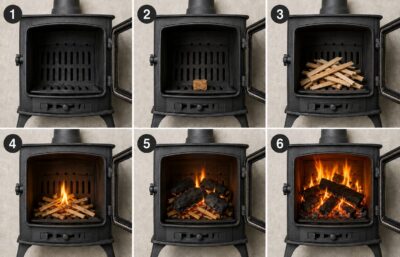
Step 1: Set the grate and controls
Use the position specified for the intended fuel. Mineral fuel commonly needs air from beneath the grate, while wood usually relies more heavily on air above the fuel once established.
Step 2: Place the firelighter safely
Use a purpose-made firelighter. Never use petrol, paraffin, methylated spirits or another accelerant.
Step 3: Add dry kindling
Build a loose, stable stack with air gaps. Do not pack the firebox tightly.
Step 4: Light and close the door as instructed
Light the firelighter and control the door exactly as the manual directs. Some appliances may require a brief initial position to establish draught, but never leave a stove unattended with the door unsecured.
Step 5: Allow the kindling to establish
Wait for strong flames and a warming firebox before adding the main fuel.
Step 6: Add a small first fuel load
Add only the approved fuel and amount specified for the appliance. Give it enough air to ignite cleanly.
Step 7: Move to the normal running settings
Reduce or balance the controls gradually after the fuel is burning well. Do not close the air too early.
Video courtesy of the Stove Industry Association Knowledge Hub. Your stove manual takes priority because grate positions, door procedures and air-control functions vary.
Lighting with wood logs
When the appliance is approved for wood:
- Use untreated logs at 20% moisture or less.
- Follow the manufacturer’s grate setting for wood.
- Avoid excessive under-grate air once the logs are established unless the manual requires it.
- Leave room around the logs for flame and airflow.
- Do not allow fuel to rest against the glass.
Read How to Light a Wood-Burning Stove.
Lighting with authorised smokeless fuel
Mineral fuel needs a different firebed from logs and often relies more on primary air through the grate.
General principles are:
- Establish a hot kindling fire first.
- Add a modest amount of approved fuel.
- Allow it to ignite before building the bed further.
- Keep the grate and under-fire air path clear.
- Follow the maximum loading depth stated in the manual.
Do not create a deep fuel bed simply because there is unused space in the firebox.
How to refuel a multi-fuel stove
Step 1: Check the firebed
Refuel while there is sufficient heat to ignite the next load. The correct appearance differs between wood embers and a mineral-fuel bed.
Step 2: Prepare the controls
Move the controls to the refuelling position stated in the manual. This may involve increasing the air supply before opening the door.
Step 3: Open the door slowly
Pause after releasing the latch so pressure can equalise. Open carefully to reduce the chance of smoke or ash entering the room.
Step 4: Riddle only when required
For fuels used on a grate, operate the riddling mechanism as instructed to clear ash without emptying the useful firebed. Excessive riddling can drop live fuel into the ashpan.
Wood operation may require a different approach. Follow the exact manual.
Step 5: Add the stated fuel load
Use suitable tools and keep fuel below any maximum line or loading height.
Step 6: Close the door and establish the new load
Give the fresh fuel enough air to ignite cleanly. Reduce the controls only after it has established.
Video courtesy of the Stove Industry Association Knowledge Hub. Never empty hot ash into a plastic container or leave live embers where they can ignite other material.
How to use the air controls
The labels vary, but the terms commonly mean:
Primary air
Air introduced beneath or low in the fuel bed. It is often important for lighting and for approved mineral fuels.
Secondary air
Air entering above the fuel. It supports combustion of gases released by wood and often helps keep the glass cleaner.
Tertiary air
Pre-set or separately controlled air introduced higher in the firebox to support cleaner combustion.
Do not assume that shutting the lower control is always correct for wood, or that opening it fully is always correct for mineral fuel. The tested settings for the appliance matter.
Read How to Use Wood-Burning Stove Air Controls Correctly.
What is the riddling grate for?
Riddling moves the grate to allow ash to fall into the ashpan and maintain an air path beneath certain fuels.
Use it:
- At the frequency stated by the manufacturer.
- With the door closed where instructed.
- Gently enough to avoid damaging components.
- Before ash obstructs the underside of the grate.
Do not repeatedly riddle a wood fire unless the manual requires it. Wood often benefits from a modest ash bed, while mineral fuel needs a clearer under-fire air route.
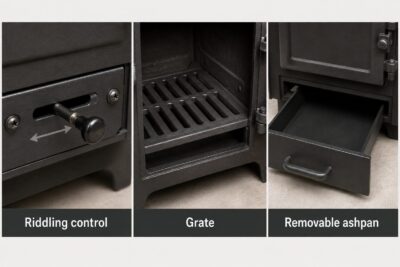
Managing the ashpan safely
Ash can remain hot for a long time.
- Wear suitable gloves.
- Use the stove tool supplied.
- Place ash in a lidded metal container on a non-combustible surface.
- Keep it away from buildings, decking and waste bins until completely cold.
- Never allow hot ash to contact plastic or cardboard.
- Do not let ash touch the grate from below.
Check local disposal guidance once the ash is fully cold. Ash from mineral fuel is not the same as clean untreated wood ash and should not be assumed suitable for a garden.
Switching between wood and smokeless fuel
Only switch if the appliance is approved for both fuels.
Before changing:
- Read the fuel-specific section of the manual.
- Set the grate correctly.
- Clear ash as instructed.
- Use the correct air-control pattern.
- Avoid mixing fuels unless the manufacturer expressly permits it.
A method that works well with logs may produce poor combustion with mineral fuel, and vice versa.
Common multi-fuel stove mistakes
Burning an unapproved fuel
“Multi-fuel” is not permission to burn waste, house coal or any fuel that fits through the door.
Letting the ashpan overfill
This can block air and overheat the grate.
Using the wood settings for mineral fuel
The fuel may fail to burn cleanly or respond correctly.
Closing controls immediately after refuelling
The new load may smoke and fail to ignite.
Leaving the door open to make the fire burn harder
This can lead to uncontrolled combustion and damage. Use the approved controls.
Mixing large logs and mineral fuel without guidance
Different fuels require different air and firebed conditions.
Overloading the firebox
Excess fuel can cause overfiring and unsafe temperatures.
Signs that the stove is not operating correctly
Stop and investigate if you notice:
- Smoke entering the room.
- A carbon monoxide alarm.
- Persistent black glass.
- Fuel repeatedly failing to ignite.
- A glowing stove body, flue or internal component.
- Cracked grate parts or linings.
- A jammed riddling mechanism.
- Unusual smell, noise or rapid fuel consumption.
Arrange maintenance rather than changing fuel or forcing the controls.
Frequently asked questions
Can I burn logs and smokeless fuel together?
Only when the appliance manufacturer specifically permits mixed firing. Many models give separate instructions for each fuel.
Can I burn ordinary household coal?
Do not assume so. Domestic coal rules have changed, and many stoves prohibit it. Use only fuel approved for the appliance and permitted in your area.
Should the vents beneath the fire stay open for wood?
This depends on the stove. Many appliances reduce primary air after logs establish, but the correct setting is model-specific.
Why does smokeless fuel keep going out?
Possible causes include insufficient under-fire air, an ash-blocked grate, too small an initial fire, unsuitable fuel or poor chimney draught.
How often should I empty the ashpan?
Empty it before ash reaches the underside of the grate and according to the manual. Confirm that all material is handled as hot until proven cold.
Multi-fuel stove advice from Knight Stoves
Knight Stoves supplies multi-fuel appliances, authorised fuels, firelighters and replacement accessories. Bring your stove make and model to our Marshfield showroom so the team can help identify the correct fuel and operating information.
Call 01225 891469, visit Castle Farm, Marshfield, or view our Multi-Fuel Stoves.
Written and reviewed by the RW Knight & Son team. Proud SIA Retail Group member. Use only fuels permitted by the appliance manufacturer and current rules in your area.