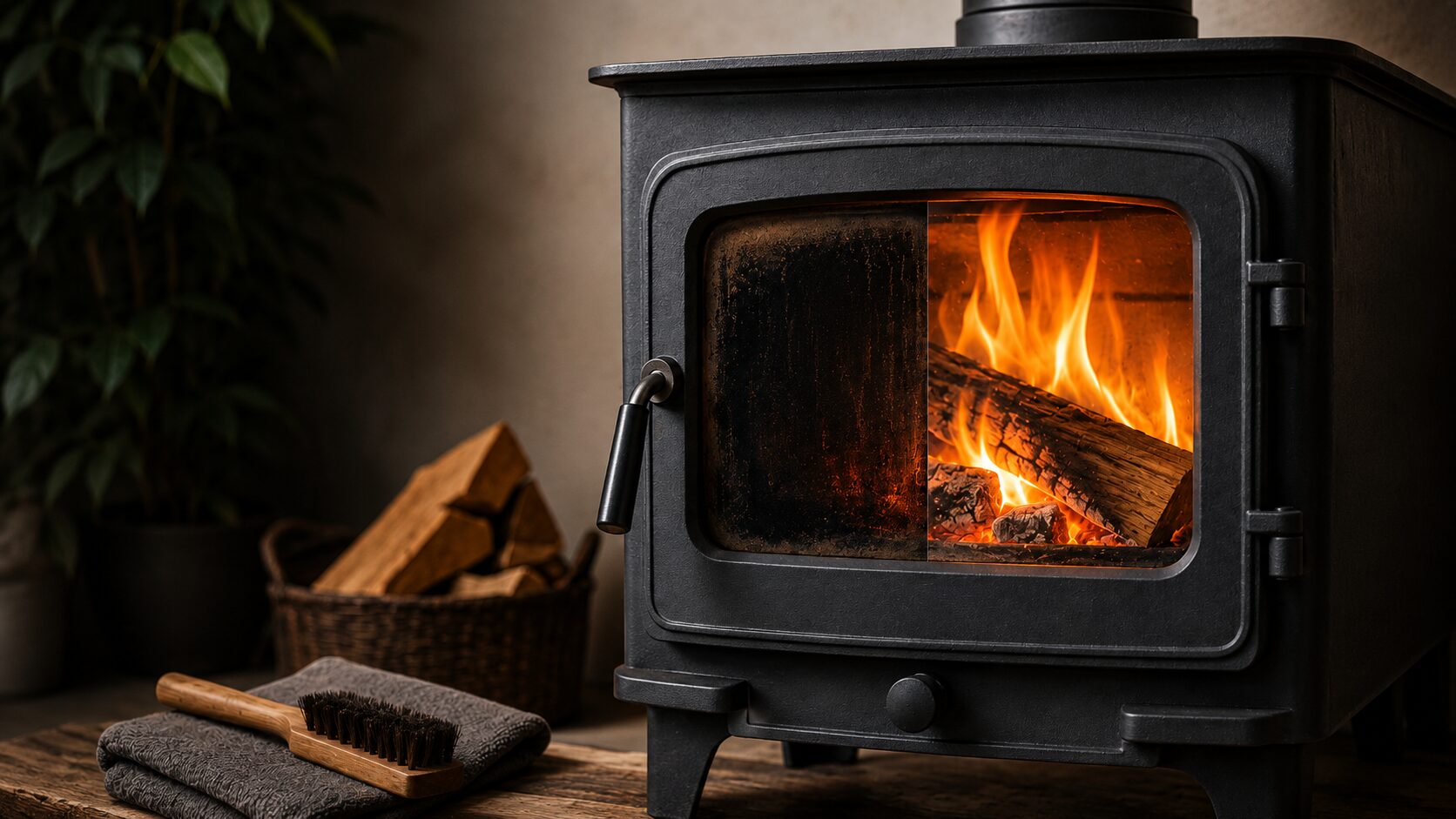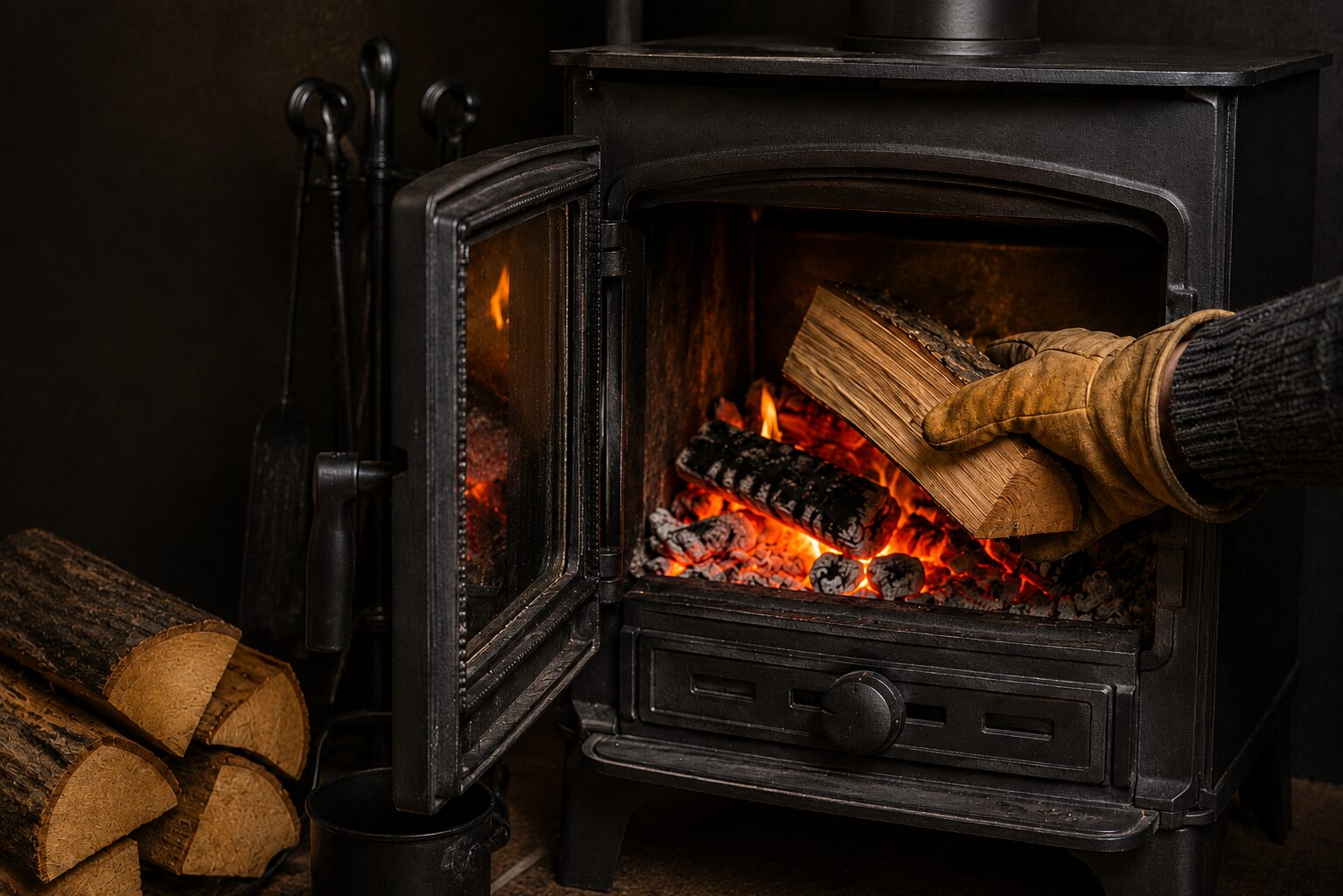
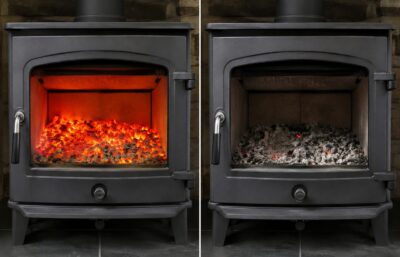
Refuel a wood-burning stove when the previous load has burned down to a bright, healthy bed of glowing embers. The flames will usually have reduced, but the firebox should still be hot enough for the new log to ignite promptly. Do not wait until only a few cold, grey embers remain, and do not keep adding logs to an already full firebox.
Good refuelling is about timing. Add fuel too early and you may overload the stove. Leave it too late and the new log may smoulder while the appliance struggles to recover its temperature.
At RW Knight & Son, trading as Knight Stoves, we regularly demonstrate this process to customers. The exact fuel load and control settings vary by model, but the same principle applies: refuel onto heat, give the new fuel air to catch and then return the stove to its normal running setting.
What should the fire look like before you add another log?
A good refuelling point usually has:
- A clear bed of glowing red embers.
- Little or no large unburned wood from the previous load.
- Reduced flames rather than a fully roaring fire.
- A hot firebox and warm chimney.
- Enough ember coverage to ignite the new log quickly.
The ember bed should look alive rather than grey and cold. If you can see only a few weak points of red, adding a large log may cool the fire and create smoke.
When to refuel a modern Ecodesign stove
Modern Ecodesign stoves are tested to burn efficiently within defined operating conditions and fuel loads. Refuel when the existing fuel has largely burned away but the ember bed remains strong.
Video courtesy of the Stove Industry Association Knowledge Hub. Always use the fuel type, load and control settings stated in the appliance manual.
An Ecodesign stove is not automatically clean if it is overfilled, run too cold or used with wet wood. Its tested performance depends on correct operation.
What about a pre-Ecodesign stove?
Older stoves can have different firebox designs, air systems and refuelling behaviour. The correct moment may still be a bright ember bed, but the amount of residual fuel and the control procedure may differ.
Video courtesy of the Stove Industry Association Knowledge Hub. “Pre-Ecodesign” describes the age or testing standard of the appliance, not its condition. Older stoves still need correct fuel, maintenance and a suitable chimney.
If you do not have the manual, identify the stove make and model before relying on generic instructions. Knight Stoves may be able to help with manuals or spares for brands we supply.
How to refuel a wood-burning stove step by step
1. Check the ember bed
Wait until the previous logs have mostly burned away. The embers should be bright and spread across enough of the firebox to ignite the next load.
2. Prepare the next log before opening the door
Choose dry, untreated wood at 20% moisture or less. The log should fit comfortably without touching the glass or obstructing internal air passages.
Do not leave the door open while you search for fuel.
3. Adjust the air control
Move the control to the refuelling position described in the stove manual. Many appliances need additional air before and after the door is opened.
4. Open the door slightly and pause
Crack the door open for a moment before opening it fully. This helps equalise the pressure and allows the chimney draught to respond.
Opening the door quickly can disturb the airflow and draw smoke or ash into the room.
5. Place the log on the embers
Use a suitable stove glove or tool. Place the fuel gently so that it is stable and does not strike the glass, lining or baffle.
Do not throw logs into the stove.
6. Close the door securely
Make sure the latch is fully engaged. Do not leave the door open as a way to make the new log catch unless the manufacturer specifically instructs a brief start-up position.
7. Give the new fuel enough air
Keep the controls at the recommended refuelling setting until the log has ignited and visible flames are established.
8. Reduce the airflow gradually
Return the control to the normal running position. Do not close it so far that the new log loses its flame and begins to smoulder.
Video courtesy of the Stove Industry Association Knowledge Hub. The correct position and timing vary between appliances.
How many logs should you add?
Use the load stated in the appliance manual. A common mistake is to judge the load only by how much space remains in the firebox.
The tested fuel load may be defined by:
- Number of logs.
- Total weight of wood.
- Maximum log dimensions.
- Position within the firebox.
- Time between refuelling cycles.
One dense hardwood log can contain more fuel than a similarly sized piece of softwood. Weighing a few typical logs at home can help you understand what the manufacturer’s stated kilogram load looks like in practice.
Do not pack logs tightly to the top of the firebox. The flames and combustion gases need space to move.
Why adding a large log too late causes problems
A cold or weak ember bed may not release enough heat to ignite a large log quickly. The log can then:
- Smoulder.
- Produce visible smoke.
- Blacken the glass.
- Cool the firebox.
- Increase deposits in the chimney.
- Give less useful heat.
If the fire has almost gone out, it may be better to rebuild it with dry kindling and smaller pieces rather than placing a large log onto weak embers.
Can you add logs while the stove is still flaming strongly?
Usually, wait until the previous load has burned down. Adding new fuel too early can overfill the stove and cause excessive heat.
The exceptions depend on the appliance and the reason for the adjustment. Follow the manufacturer’s instructions rather than using the visible space in the firebox as a guide.
How often should you refuel?
There is no universal interval. Refuelling frequency depends on:
- The stove’s nominal heat output.
- The manufacturer’s tested fuel load.
- Log weight and density.
- Air-control setting.
- Chimney draught.
- The heat needed by the room.
- Whether the stove is being run within its intended output range.
Many intermittent-burning stoves are designed around repeated fuel cycles rather than being continually topped up. Use the manual’s example cycle as the starting point.
If you need to shut the stove down severely to stop the room overheating, the appliance may be too large for the space. Try our kW calculator as an initial guide, then confirm the requirement with professional advice.
Do not slumber a stove unless it is designed for it
Trying to make a wood stove last overnight by loading it heavily and closing the controls can lead to prolonged smouldering, smoke and deposits.
Only use an overnight or slumbering mode where the appliance is specifically designed, tested and instructed for that operation. Many modern wood-burning stoves are intermittent appliances and should not be treated as overnight burners.
Why does smoke come out when I open the door?
Smoke spillage can have several causes:
- The door was opened too quickly.
- The chimney is still cold.
- The ember bed is weak and smoky.
- The flue is partly blocked.
- The room lacks replacement air.
- An extractor fan is affecting the draught.
- Weather conditions are creating downdraught.
- A cold plug has formed in the chimney.
Open the door slowly and keep the opening time short. If smoke repeatedly enters the room, stop using the stove and arrange an investigation. Do not accept regular smoke spillage as normal.
Read our guide to cold plugs in chimneys and explore the Knight Stoves flue and chimney guide.
Common refuelling mistakes
Refuelling on cold ash
The new log may not catch cleanly. Rebuild the fire with smaller dry fuel if necessary.
Adding wet wood
Water cools the fire and wastes energy. Test the freshly split centre of the log and use wood at 20% moisture or less.
Filling every available space
Overloading can cause excessive temperatures and restrict the movement of combustion gases.
Leaving the door open
An open door can supply uncontrolled air and may allow sparks or smoke into the room. Follow the manual.
Closing the controls as soon as the door shuts
The new log needs enough air to ignite. Reduce the control only after active flames have returned.
Hitting the glass or lining with the log
Stove glass and internal lining materials tolerate heat but can be damaged by impact.
Frequently asked questions
Should I add one log or two?
Use the manufacturer’s stated fuel load. The correct answer depends on the stove, the weight of the logs and the required output.
Can I add a log before going to bed?
Do not leave a burning stove unattended or operate it outside its instructions. Many wood stoves are not designed for overnight slumbering.
Should I rake the embers before refuelling?
Some manufacturers recommend bringing the embers together or lightly levelling them. Avoid aggressive disturbance that sends ash into the room, and follow the appliance manual.
Why does the new log turn black before it burns?
The fuel may be damp, too large or placed on weak embers. The air may also have been reduced too quickly.
Do hardwood logs need a different refuelling time?
Hardwood is usually denser and may burn for longer than a similarly sized softwood log. The total weight and the stove’s instructions matter more than the species name alone.
Fuel and advice from Knight Stoves
Knight Stoves stocks Ready to Burn packaged logs, heat logs, smokeless fuel, kindling and firelighters. Visit our fuel and firelighters page or call 01225 891469.
For more guidance, read:
Written and reviewed by the RW Knight & Son team. Proud SIA Retail Group member. This guide provides general information and does not replace the appliance manual, an inspection or advice from a suitably qualified professional.