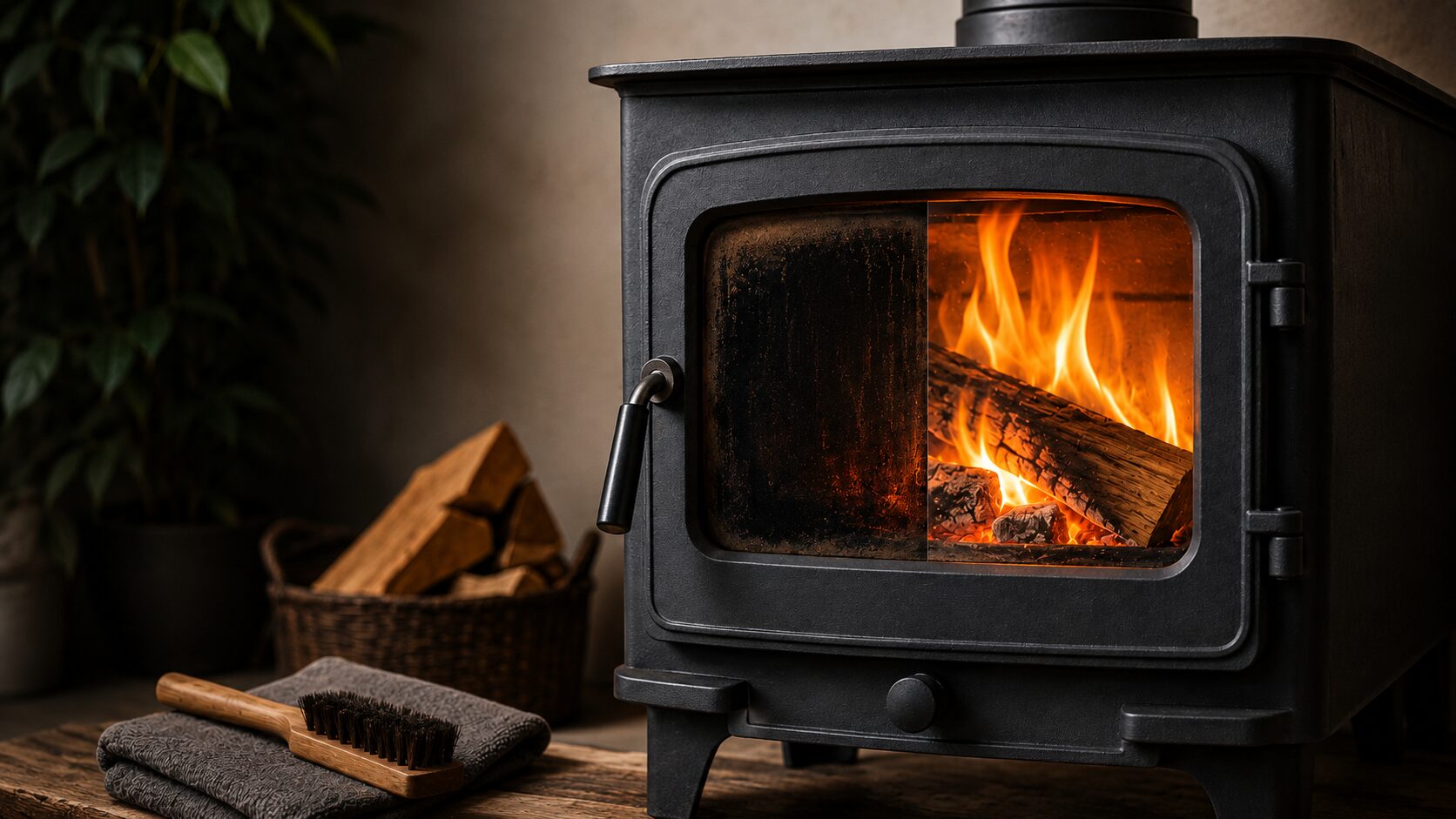
Stove glass usually turns black because the fire is too cool, the wood is too wet, the airflow has been restricted too far or a log is placed too close to the window. A dirty airwash channel, weak chimney draught or worn door seal can also contribute.
A light haze after lighting can be normal and may clear as the stove reaches temperature. Thick black soot that returns quickly is a sign to investigate the fuel, operation or appliance condition rather than simply cleaning the glass again.
At RW Knight & Son, trading as Knight Stoves, we regularly help customers identify whether black glass is a fuel issue, an operating issue or a worn part. The pattern of the deposits often provides a useful clue.
Video courtesy of the Stove Industry Association Knowledge Hub. Always allow the stove to cool fully and follow its cleaning instructions.
The most common causes of black stove glass
1. Wet wood
Wet logs cool the fire and release more smoke before they burn properly. The smoke condenses on the cooler glass and creates dark deposits.
Split a sample log and test the freshly exposed centre with a moisture meter. Use wood at 20% moisture or less.
Read our guide to firewood moisture content.
2. Closing the air controls too soon
The fire needs enough air to establish and bring the firebox and flue up to temperature. Reducing the control as soon as the kindling catches can cause the main logs to smoulder.
Wait for active flames and reduce the air gradually. Read how to use stove air controls.
3. Running the stove too low
An oversized stove may make the room uncomfortably warm at normal output, encouraging the owner to close the controls and keep it barely alight. This can cause recurring black glass and chimney deposits.
The correct stove size should meet the room’s heat requirement without needing constant restricted burning. Use our kW calculator as a starting point.
4. Logs touching or sitting too close to the glass
Fuel close to the door interrupts the airwash and cools the glass locally. Resin, soot and moisture can then mark the area.
Keep logs behind the fuel retainer and within the loading position shown in the manual.
5. Oversized logs
A large log may fit through the door but still be too large for the firebox. It can take longer to ignite, reduce airflow around the fuel and sit too close to the glass.
Use the manufacturer’s maximum log length and recommended fuel weight. Read our guide to choosing the right log size.
6. Blocked or ineffective airwash
Ash and debris can affect accessible airwash slots. The control may also be set too low for the system to work.
Clean only the user-accessible passages identified in the manual. If the airwash appears ineffective despite correct fuel and firing, arrange an inspection.
7. A weak or cold chimney draught
A cold chimney can struggle to pull enough air through the appliance during start-up. A blockage, unsuitable flue, ventilation problem or weather condition can also reduce draught.
If black glass is accompanied by smoke entering the room, difficulty lighting or a smoky smell, stop using the stove and have the system checked.
8. A failed door or glass seal
A damaged seal can alter the intended airflow. Depending on the fault, it may create uncontrolled burning or disturb the airwash pattern.
Check the rope for flattening, gaps and damage. Do not install a random replacement thickness. Use the correct part for the stove.
9. Unsuitable fuel
Treated timber, waste wood, cardboard, household rubbish and inappropriate manufactured fuel can create heavy deposits and harmful fumes.
Use only fuel approved in the appliance manual. Read what you can burn in a wood-burning stove.
What the soot pattern can tell you
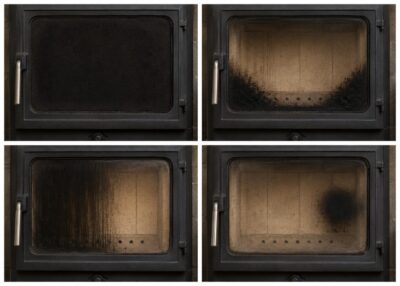
The whole window turns black
Likely causes include wet fuel, a fire that is too cool or airflow restricted too far.
The lower corners turn black
This can occur where the glass is cooler or the airwash is weakest. Check log position, fuel size and operating temperature.
One side is dirtier than the other
Check whether fuel is consistently loaded to one side, the seal is uneven or an air passage is affected.
A local patch appears where a log sat
Move fuel away from the glass and use the fuel retainer correctly.
Brown, sticky or shiny deposits appear
These can indicate tar or condensate rather than loose soot. Stop treating the issue as simple cosmetic dirt and arrange advice on fuel, operating temperature and chimney condition.
How to keep stove glass cleaner
Use dry wood
Test the freshly split centre and keep the supply covered and ventilated.
Light the stove properly
Use dry kindling, a suitable firelighter and the manufacturer’s start-up airflow. The top-down lighting method suits many modern stoves.
Let the fire establish
Do not close the control as soon as flames appear. Warm the stove and chimney first.
Burn within the appliance’s intended range
Avoid repeated low, smoky burning and do not overfire.
Use the correct fuel load
Follow the stated number or weight of logs rather than filling every available space.
Keep fuel away from the glass
Place logs stably behind the retainer.
Maintain the stove and chimney
Check seals, linings, baffle and accessible airways. Keep the chimney swept.
How to clean black stove glass safely
Allow the appliance and glass to become completely cold.
Then:
- Protect the hearth.
- Remove loose dust with a soft dry cloth where appropriate.
- Use the cleaning method approved by the manufacturer.
- Apply specialist stove-glass cleaner to the cloth rather than spraying it into seals or joints, unless the instructions say otherwise.
- Avoid abrasive pads that can scratch the glass or printed border.
- Keep rope seals and gaskets dry.
- Wipe away residue and let the area dry before relighting.
Some owners use damp newspaper dipped in clean wood ash. Do not use this method unless the manufacturer permits it. Ash can contain abrasive particles, and contaminated ash is unsuitable.
Never clean hot glass. Sudden cooling and liquid can damage the panel or gasket.
When cleaning is not enough
Arrange advice when:
- The glass turns black during every burn despite dry fuel.
- The stove is difficult to control.
- Smoke enters the room.
- The glass is loose, chipped or cracked.
- The air control no longer changes the flame.
- Tar-like deposits appear.
- The door seal fails the manufacturer’s check.
- Performance changes suddenly.
Persistent symptoms may involve the chimney, room ventilation or installation rather than the glass itself.
Can the glass clean itself during a hot burn?
A well-established fire and effective airwash can burn off or reduce a light soot haze. This does not mean you should deliberately overfire the stove.
If the glass needs an excessively fierce fire to clear, investigate the fuel and normal operating method.
Does black glass mean the chimney is dirty?
Not always, but the same poor burning that blackens glass can also increase deposits in the flue.
If blackening is frequent, review the sweeping schedule with a competent chimney sweep. HETAS encourages at least two sweeps a year when burning wood.
Read how often a chimney should be swept.
Frequently asked questions
Why does the glass go black overnight?
Trying to keep a stove smouldering with restricted air can create heavy soot. Do not slumber the appliance unless it is specifically designed and instructed for that use.
Why is the glass black only when I use certain logs?
Those logs may be wetter, larger or more contaminated than the rest. Split and test them, and check their origin.
Can I use oven cleaner on stove glass?
Use only products approved by the stove manufacturer. Oven cleaner can damage coatings, seals, paint and surrounding materials.
Does airwash mean the glass will never need cleaning?
No. Airwash reduces deposits when the stove is hot and operated correctly, but occasional cleaning may still be needed.
Can I use the stove with cracked glass?
No. Stop using it and fit the correct heat-resistant replacement with the specified gasket and clips.
Glass, seals and maintenance parts from Knight Stoves
Knight Stoves stocks many common stove-glass panels, rope seals, firebricks and maintenance products. If the part is not held, we may be able to order or prepare it depending on the model.
Bring:
- Stove make and model.
- Serial number where available.
- Clear photographs.
- The old part if it is safe to transport.
Call 01225 891469 or visit the Marshfield showroom.
Written and reviewed by the RW Knight & Son team. Proud SIA Retail Group member. This guide provides general information and does not replace the appliance manual, an inspection or advice from a suitably qualified professional.