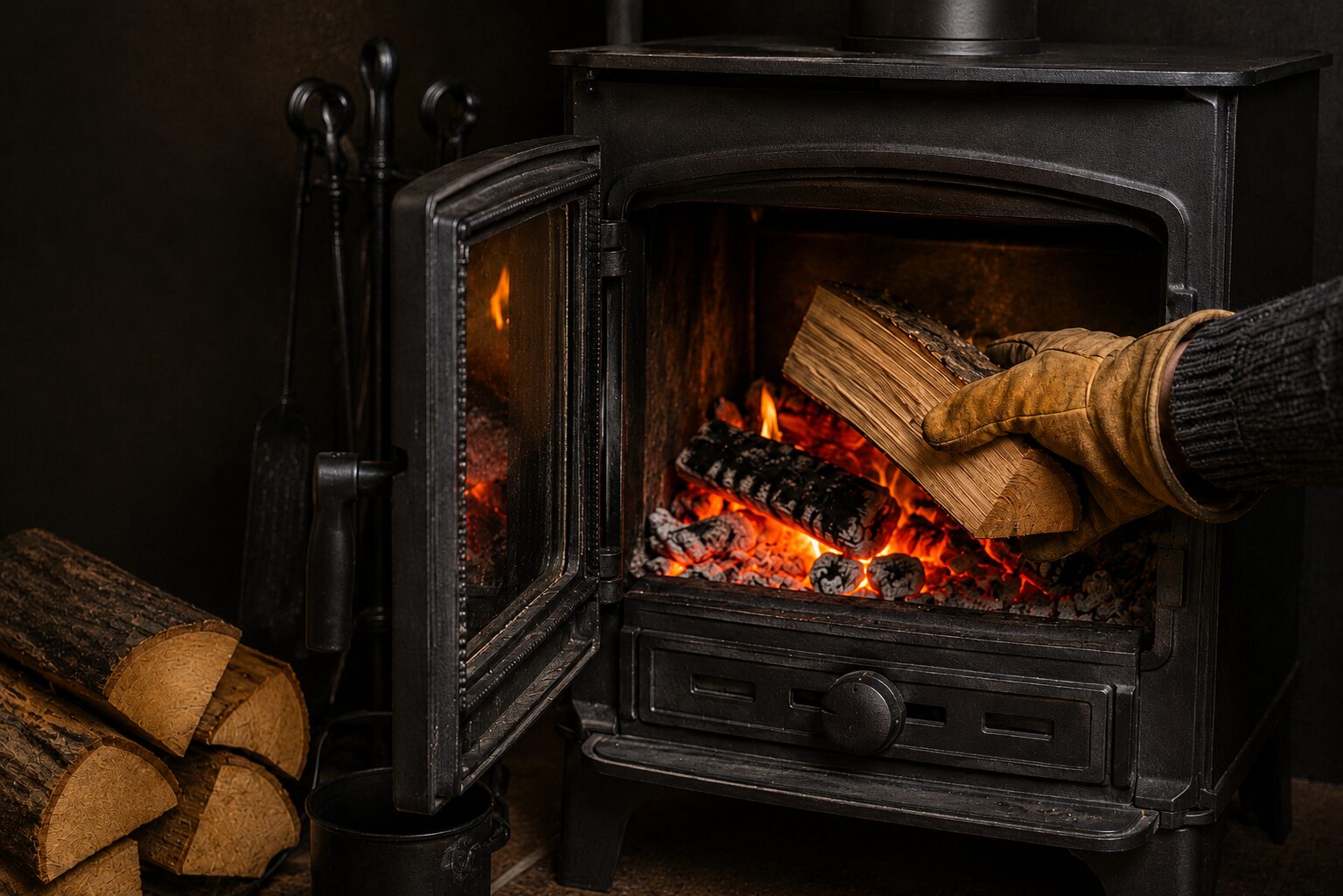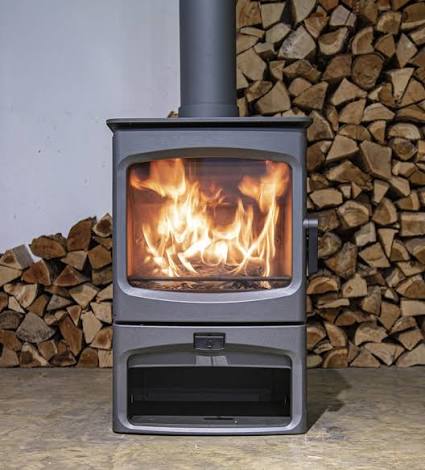
If you own a wood burning stove, the type of wood you use makes a big difference.
Dry wood burns hotter, cleaner and more efficiently. Wet wood does the opposite. It creates more smoke, gives off less heat, blackens your stove glass and can lead to soot and tar building up in your chimney.
That means more cleaning, more wasted fuel and a less enjoyable fire.
What counts as dry wood?
For stove use, dry wood should have a moisture content of 20% or less. This is the level recommended by Defra, HETAS and the Stove Industry Association. Wood above this level produces more smoke and tar, and can damage your stove and chimney over time.
Freshly cut logs can contain a large amount of water. In simple terms, if you burn fresh or poorly seasoned wood, your stove has to waste energy boiling off the moisture before it can produce proper heat.
That is why wet logs often hiss, smoke and struggle to burn well.
Watch: why 20% moisture matters
The Stove Industry Association recommends using logs with a moisture content of 20% or less. At this level, less of the fire’s energy is wasted driving water from the wood, helping the stove reach an effective operating temperature more quickly.
Video courtesy of the Stove Industry Association Knowledge Hub. The video provides general guidance. Always follow the operating instructions supplied with your specific appliance.
At Knight Stoves, all packaged firewood we stock is Ready to Burn certified. You can view our fuel and firelighters range or visit the showroom to collect logs, kindling and suitable lighting products.
Why modern stoves need dry wood
Modern wood burning stoves are designed to burn efficiently.
But they can only do that when the right fuel is used.
When you burn properly seasoned or kiln dried logs, your stove can reach the right temperature faster and keep a cleaner burn. This means:
- More heat from each log
- Less smoke
- Cleaner stove glass
- Less soot in the flue
- Lower maintenance costs
- A better fire with fewer logs
Wet wood can make even a good quality stove perform badly.
Look for the Ready to Burn logo
If you buy logs, the easiest way to choose the right fuel is to look for the Ready to Burn logo.
Wood sold in England in volumes of up to 2 cubic metres must be certified as Ready to Burn, meaning it has a moisture content of 20% or less and is suitable for immediate use. This legislation has been in place since May 2021.
This gives you confidence that the firewood you are buying is suitable for your stove.
Can you season your own logs?
Yes, but it takes time.
Freshly felled timber needs to be cut, split and stored correctly before it is ready to burn. Ideally, logs should be kept in a covered, well-ventilated log store where air can move freely around them.
Drying time depends on the type of wood, the size of the logs and how well they are stored.
As a rough guide:
- Ash can season in around 12 months
- Many hardwoods need 18 to 24 months
- Oak can take up to 36 months
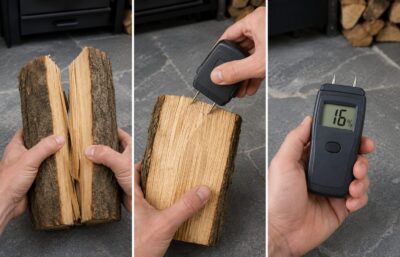
A moisture meter is a simple and affordable way to check whether your logs are ready. The Stove Industry Association recommends checking the moisture content to ensure it is below 20% before burning.
How to test a log with a moisture meter
Do not rely on a reading taken only from the outside of the log. The surface can feel dry while the centre still contains too much moisture.
Use this method:
- Bring the log to roughly room temperature if it has been stored in very cold conditions.
- Split the log through the middle.
- Press the moisture meter pins firmly into the freshly exposed inner face.
- Test more than one position and more than one log from the batch.
- Burn the wood only when the readings are 20% or below.
Video courtesy of the Stove Industry Association Knowledge Hub. The video provides general guidance. Moisture-meter instructions vary, so also follow the directions supplied with the meter.
Signs that wood may still be too wet
A moisture meter gives the clearest answer, but wet wood may also:
- Feel unusually heavy for its size.
- Hiss or release moisture from the ends when heated.
- Struggle to catch and remain alight.
- Produce a dull, smoky flame.
- Blacken the glass quickly.
- Leave sticky deposits in the stove or flue.
Cracked ends and a hollow sound can suggest that a log has dried, but these signs are not as reliable as testing a freshly split face.
Keep dry wood dry
Ready to Burn certification confirms the condition of the wood when supplied. Poor storage can allow it to absorb moisture again.
Store logs:
- Off the ground.
- Under cover from rain.
- With open sides or airflow around the stack.
- Away from persistent damp.
- In small indoor quantities rather than filling the room with a large long-term supply.
Read our full guide to storing firewood indoors and outdoors.
Dry wood saves money too
Dry wood gives you more usable heat from each log.
That means you usually need fewer logs to achieve the same warmth. So while cheap wet logs may look like a saving, they often cost more in the long run because they burn poorly and create more maintenance issues.
Burn better wood, and your stove will work better.
Moisture content is only one part of good fuel
A dry log can still be unsuitable if it is painted, treated, contaminated or too large for the firebox. Use clean, untreated firewood in a size recommended by the stove manufacturer.
Do not burn:
- Painted or varnished timber.
- Pressure-treated wood.
- MDF, chipboard or plywood.
- Furniture and construction offcuts.
- Pallets of unknown origin.
- Household rubbish or plastic.
These materials can create harmful fumes, damage the appliance and cause excessive deposits. Read our guide to what you can and cannot burn in a wood-burning stove.
Frequently asked questions
Is kiln-dried wood always below 20% moisture?
Properly produced and stored kiln-dried firewood should be ready to burn, but packaging and storage conditions matter. Look for the Ready to Burn certification mark and test a sample if the logs have been stored for a long time or exposed to damp.
Can firewood become wet again after seasoning?
Yes. Dry wood can absorb moisture if it is left in rain, placed directly on damp ground or stored in a poorly ventilated space. Keep the main supply covered and ventilated, then bring in only a modest amount for immediate use.
Does hardwood need a lower moisture level than softwood?
No. Both hardwood and softwood should be 20% moisture or less before they are burned. Their density and burning characteristics differ, but the same moisture rule applies.
A simple rule for stove owners
If you want a warmer, cleaner and more efficient fire, use good quality dry logs. Choose “Ready to Burn” certified wood, store it properly, and avoid burning anything wet, painted, treated or unsuitable for your stove. Your stove glass will stay cleaner. Your chimney will thank you. And your home will get more heat from every log.
Written and reviewed by the RW Knight & Son team. Proud SIA Retail Group member. Use only clean, untreated fuel that is permitted by the appliance manufacturer, and store it so it remains at 20% moisture or less.